Rearming kits
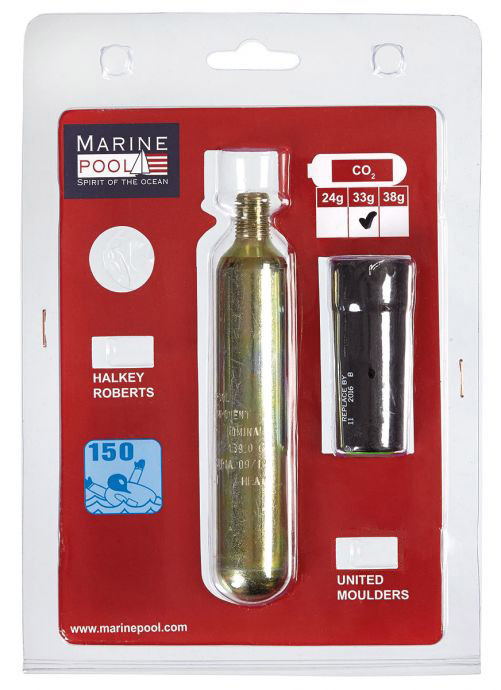
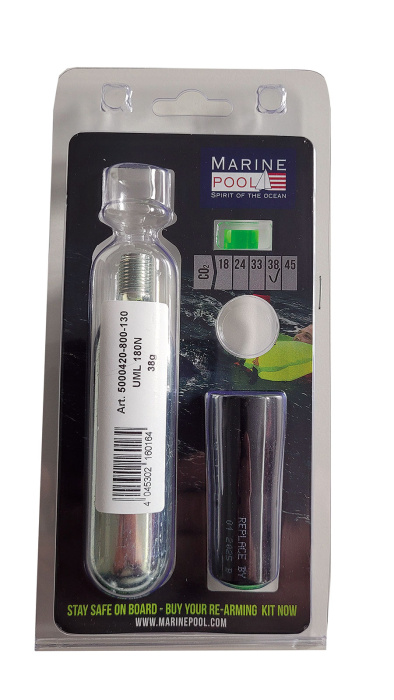
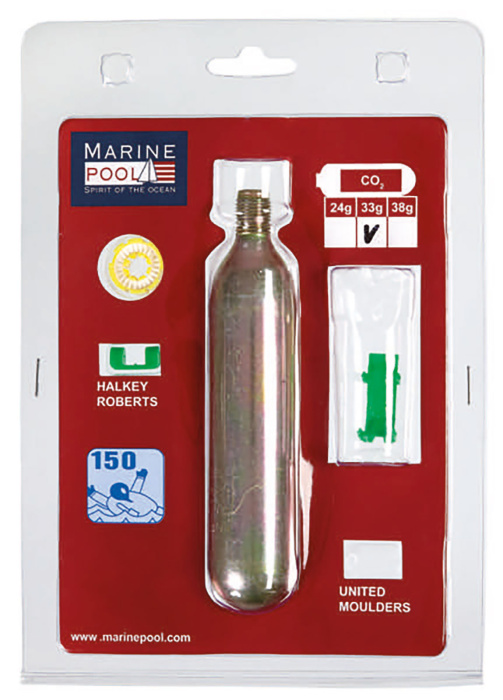
After activation, an automatic life jacket must be made ready for use again with the appropriate replacement kit. At Marinepool, you will find replacement kits for different activation systems and CO₂ cartridge sizes.
Replacement Kits for Automatic Life Jackets
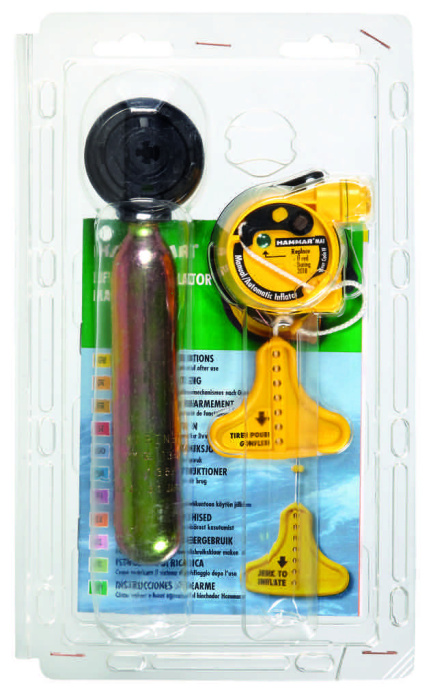
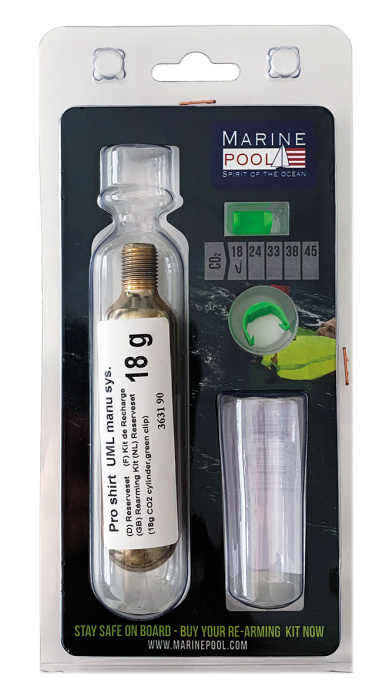
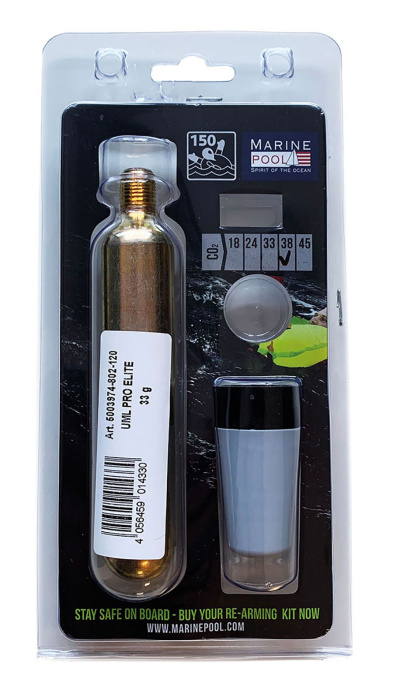
An automatic life jacket can only fulfil its protective function if the CO₂ cartridge, activation mechanism and buoyancy chamber are ready for use. After activation, the life jacket must therefore be made ready for use again with the exact matching replacement kit. At Marinepool, you will find replacement kits for different activation systems such as UML, UML Pro Sensor, UML Pro Sensor Elite, Hammar and Halkey-Roberts (HR), as well as various CO₂ cartridge sizes to suit the respective life jacket.
What Is a Replacement Kit for a Life Jacket?
Automatic life jackets have an inflatable buoyancy chamber. When the life jacket enters the water, the activation system triggers a CO₂ cartridge, which fills the buoyancy chamber with gas within a short time. Depending on the life jacket, activation can also take place manually or exclusively via a pull cord.
Once activated, the CO₂ cartridge is used up. Depending on the design, components of the activation mechanism must also be replaced in automatic systems. A replacement kit, often referred to as a recharge kit or rearming kit, contains the components required for the respective system to make the life jacket ready for use again according to the manufacturer's instructions.
Important: The replacement kit must match the life jacket and its installed activation system exactly. A CO₂ cylinder that looks similar or a kit designed for the same buoyancy class is not automatically compatible.
When Does a Replacement Kit Need to Be Replaced?
After each actual activation, it is necessary to check which components need to be replaced according to the operating instructions. This applies regardless of whether the life jacket was activated in an emergency, during a test or accidentally.
Replacement may also be necessary even if the life jacket has not been activated, for example if a CO₂ cartridge shows signs of corrosion or damage, the activation mechanism's status indicator does not indicate readiness for use, or an activation component has reached the end of its intended service life. Water-soluble or moisture-sensitive activation components must be stored in a dry environment and in accordance with the manufacturer's instructions.
A life jacket with an unclear status indicator, a damaged cartridge or a potentially faulty activation mechanism should not be used until the cause has been identified. A quick self-check is no substitute for professional servicing.
UML, HR or Hammar – Why Are There Different Replacement Kits?
Automatic life jackets can be equipped with different activation systems. These systems differ in their technical design and therefore require specifically designed replacement components.
UML Automatic is an automatic activation system for which Marinepool offers various kits to match the life jacket and CO₂ cartridge size. UML Pro Sensor and Pro Sensor Elite have their own compatible replacement kits and are used in some of Marinepool's higher-specification life jackets.
Halkey-Roberts (HR) is another automatic activation system. Here too, the CO₂ cartridge size must match the respective life jacket exactly.
Hammar systems operate according to a different technical principle and require a dedicated Hammar replacement kit. UML or HR kits are therefore not interchangeable with Hammar kits.
Special manual recharge kits are also available for manually activated life jackets and products such as the corresponding Aquardian Pro Shirts.
You can find information on which kit is suitable for which life jacket in the respective product description.
Difference Between a Replacement Kit and Servicing
The replacement kit replaces used or worn components of the inflation system. Professional servicing of a life jacket goes much further.
Servicing involves more than simply checking whether a CO₂ cartridge is present. The buoyancy chamber must remain airtight, the automatic activation system must function reliably, and other safety-related components must show no signs of damage or wear.
During professional servicing, Marinepool checks in particular the airtightness of the buoyancy chamber and the functionality of the automatic inflation system. The completed service is documented with a Marinepool service sticker indicating when the next inspection is due.
Professional servicing can also identify damage that may not be apparent during a superficial visual inspection. For this reason, the German Sailing Federation also emphasises that lifesaving equipment must be checked regularly and that the maintenance intervals specified by the manufacturer must be observed.
How Often Does an Automatic Life Jacket Need to Be Serviced?
For Marinepool automatic life jackets with United Moulders or Halkey-Roberts systems, a servicing interval of two yearsapplies. For Hammar systems, Marinepool specifies a minor service after 2.5 years and a major service after five years.
The standard service life of an automatic life jacket is generally around ten years. Materials, buoyancy chambers and technical components age even if the life jacket is rarely used. After this period, the manufacturer's or professional service provider's current specifications must be followed.
The servicing date should therefore be checked just as routinely as the condition of the CO₂ cartridge.
What Should I Check Before Every Use?
Even a regularly serviced life jacket should be briefly checked before putting it on. This check is particularly important after prolonged storage, before a longer sailing trip or before heading out in challenging conditions.
-
Service sticker: Is the next professional service not yet due?
-
Activation system: Does the status indicator show that the life jacket is ready for use according to the manufacturer's specifications?
-
CO₂ cartridge: Is the correct cartridge installed, securely attached and free from visible corrosion or damage?
-
Outer cover and buoyancy chamber: Are there any visible tears, abrasions or other signs of damage?
-
Straps and fastenings: Are the waist belt, crotch strap, buckles and, if applicable, the integrated safety harness free from visible damage?
-
Manual activation: Is the pull cord correctly accessible and not trapped inside the cover?
-
Oral inflation valve: Are there no obvious signs of damage?
-
Accessories: Are the whistle, light and sprayhood – if fitted – securely attached and ready for use?
This visual inspection is an important additional safety measure, but does not replace the required professional servicing. Marinepool particularly recommends checking the straps, fastenings, outer cover, CO₂ cartridge, activation mechanism and status indicator before use.
When Should a Life Jacket No Longer Be Used?
An automatic life jacket should no longer be used if there is any doubt about its functionality. This includes, for example, visible damage to the buoyancy chamber, severe abrasion, defective straps or fastenings, corrosion on the inflation system, an unclear status indicator or unexplained pressure loss in the buoyancy chamber.
Overdue professional servicing should also be taken seriously. Life jackets are part of personal safety equipment and must function reliably in an emergency.
A replacement kit is therefore not a repair kit for a damaged life jacket. Damage to the buoyancy chamber, outer cover or other safety-related components must be assessed and repaired by a professional service provider.
Marinepool Life Jacket Servicing Service
We also offer a professional servicing service for Marinepool life jackets. During our system check, we inspect the airtightness of the buoyancy chamber and the functionality of the automatic inflation system, among other things. Successful servicing is documented with a Marinepool service sticker.
Our service also includes repairs and the replacement of protective covers or buoyancy chambers if required. Marinepool's in-house servicing department inspects automatic life jackets with the corresponding Marinepool or Lade OÜ identification on the manufacturer's label.
If you are unsure which replacement kit you need or whether your life jacket is still ready for use, please contact us at info@marinestore.de.
If there are any safety-related concerns, we generally recommend having the life jacket inspected rather than simply replacing individual components on suspicion.
FAQ – Frequently Asked Questions About Replacement Kits and Life Jackets
How Should I Store Replacement Kits Properly?
Keeping a spare replacement kit on board is particularly useful on longer sailing trips. If a life jacket is activated, it may otherwise not be possible to make it ready for use again for the remainder of the trip.
The replacement kit should be stored in a dry, clean and protected location. Moisture is particularly problematic for water-activated inflation systems. CO₂ cartridges should also be protected against corrosion and mechanical damage.
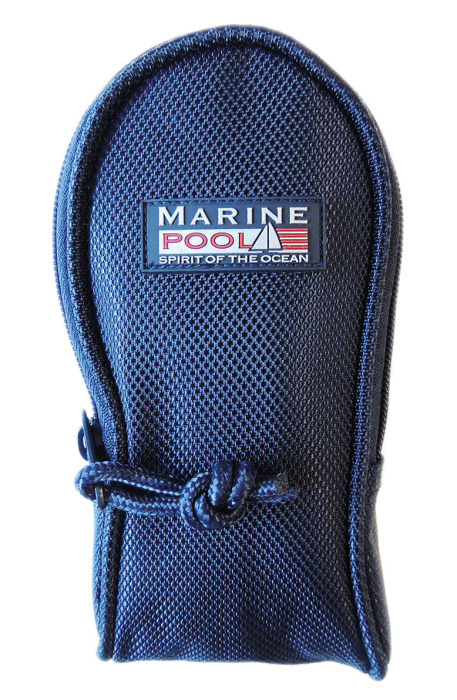
Our Replacement Kit Bag allows spare parts to be stored together and kept easily accessible on board.
If you have several life jackets on board with different activation systems or cartridge sizes, you should clearly identify which replacement kit belongs to each life jacket. This prevents the wrong kit from being used accidentally in an emergency.
Can I Use a Larger CO₂ Cartridge?
No. Only use the CO₂ cartridge specified for the exact life jacket model. The cartridge's gas capacity in grams is matched to the volume and design of the buoyancy chamber. Using a different cartridge does not provide a useful additional safety margin.
Do I Also Need a Replacement Kit for a Regular Buoyancy Aid?
No. Traditional foam-filled buoyancy aids have a solid buoyancy material and are not inflated using a CO₂ cartridge. Replacement kits are required for inflatable automatic and corresponding manual life jacket systems.
However, foam-filled buoyancy aids should also be regularly checked for damage, including the condition of seams, straps, buckles and buoyancy material.