Gloves
Sailing gloves protect hands from strain, friction, and moisture while improving grip and control on board.
-

-
-
Sale

-
Sale

-

Sailing Gloves for Grip and Protection on Board
When trimming, hauling in or easing sheets, hands and fingers are exposed to considerable strain from ropes and lines. Particularly during fast manoeuvres or when handling lines under heavy loads, friction, pressure points and blisters can occur. Sailing gloves protect the areas exposed to the greatest strain while providing better grip, especially when handling wet ropes. Depending on the weather, sailing discipline and personal preference, short-finger, long-finger or neoprene gloves may be suitable. This allows sailors to maintain a good feel for ropes and fittings while keeping their hands reliably protected during training, regattas and long days on the water.
Short-Finger or Long-Finger Sailing Gloves: Which Do I Need?
Different types of gloves are suitable for different uses. Short-finger gloves provide greater tactile sensitivity and are ideal for warm conditions and tasks requiring precision. Long-finger gloves offer full finger protection and are particularly useful in cooler temperatures or during intensive use.
Materialien und funktionale Eigenschaften
Short-Finger Sailing Gloves
Short-finger gloves leave the fingertips exposed. This preserves a high level of tactile sensitivity, for example when handling small fittings, tying knots or using other equipment.
They are particularly suitable for:
-
warm to mild temperatures
-
performance sailing and regattas
-
sailors who need a high level of fingertip sensitivity
-
situations where the palms and lower parts of the fingers primarily need protection
Long-Finger Sailing Gloves
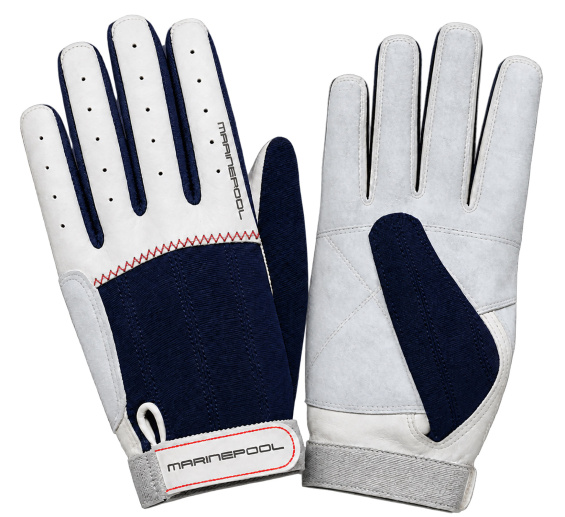
Long-finger gloves provide more comprehensive protection for the fingers against friction and contact with ropes. They are particularly useful under heavy loads or in low temperatures.
Sailors who regularly take part in long training sessions or frequently handle sheets benefit from the additional protection.
Hybrid Sailing Gloves
Another option is gloves that combine short and long fingers. They provide additional protection for fingers exposed to greater strain while maintaining greater sensitivity in the thumb and index finger.
This makes them suitable for sailors who are undecided between short-finger and long-finger gloves.
Which Sailing Gloves Are Suitable for Cold Weather?
At low temperatures, protection against the cold becomes just as important as grip and abrasion resistance. Cold fingers lose dexterity more quickly, making it harder to handle ropes safely.
For cool and wet conditions, we therefore recommend neoprene gloves. Neoprene provides additional warmth and is particularly suitable when hands are frequently exposed to water.
On warm days, however, this level of insulation can quickly become excessive. Lighter short-finger gloves are usually more comfortable in these conditions.
How Should Sailing Gloves Fit?
Sailing gloves should fit snugly without feeling restrictive. Gloves that are too loose can slip or form folds when gripping. If the gloves are too tight, freedom of movement and comfort may be restricted.
When trying on sailing gloves, make sure that:
-
all fingers can move freely,
-
the palm does not feel tight when gripping,
-
there is as little excess material as possible,
-
the gloves fit securely around the wrist.
The fit when gripping is particularly important. When trying on gloves, make a fist several times to ensure they neither feel too tight nor slip out of place.
How to Properly Care for Sailing Gloves
Saltwater, sweat and moisture can put strain on materials over time. After use in saltwater, sailing gloves should therefore be rinsed with clean fresh water and left to air dry. Direct exposure to intense heat should be avoided.
Regularly check the palms, fingers and seams for signs of wear. If the grip surfaces are heavily worn or reinforcements are damaged, the gloves may no longer provide sufficient protection when handling ropes.
FAQ – Frequently Asked Questions About Sailing Gloves
Which Gloves Are Suitable for Sailing?
Short-finger gloves are suitable for warm conditions and provide greater fingertip sensitivity. Long-finger gloves offer more protection during intensive use, while neoprene gloves are designed for cold and wet conditions. The best option therefore depends primarily on the weather, intended use and personal preference.
Do I Need Sailing Gloves for Dinghy Sailing?
In dinghy sailing, sheets are handled frequently and quickly. Sailing gloves protect the hands from friction and can improve grip during fast manoeuvres. They are therefore particularly useful for regular training sessions or regattas.
Last updated: October 2026