Drysuits
When the water and air temperatures get colder, the right equipment becomes essential. With a Marinepool drysuit, you remain reliably protected on the water even at low temperatures. This allows you to focus on your time on the water, training, and the next regatta.
-
Sale

Drysuits for Reliable Protection in Wet and Cold Conditions
A drysuit protects against water, wind, and cooling during dinghy sailing and other watersports such as kitesurfing, SUP, and windsurfing. Our drysuits for women and men combine waterproof materials with a high level of freedom of movement and allow warmth to be individually adjusted to the temperature and activity through the clothing worn underneath.
What Is a Dry Suit Suitable For?
A drysuit is particularly suitable for watersports where regular exposure to spray, sea spray, or full water contact is expected. Unlike traditional offshore gear consisting of a sailing jacket and sailing trousers, a drysuit forms an almost completely enclosed protective suit. Waterproof materials, sealed seams, special seals, and waterproof zips help keep the clothing worn underneath as dry as possible.
Our drysuits for women and men are particularly designed for dinghy sailing, but are equally suitable for kitesurfing, SUP, windsurfing, or other watersports. In these activities, athletes move close to the water surface and come into contact with water much more frequently than, for example, on a larger yacht. Capsizing is also part of performance dinghy sailing.
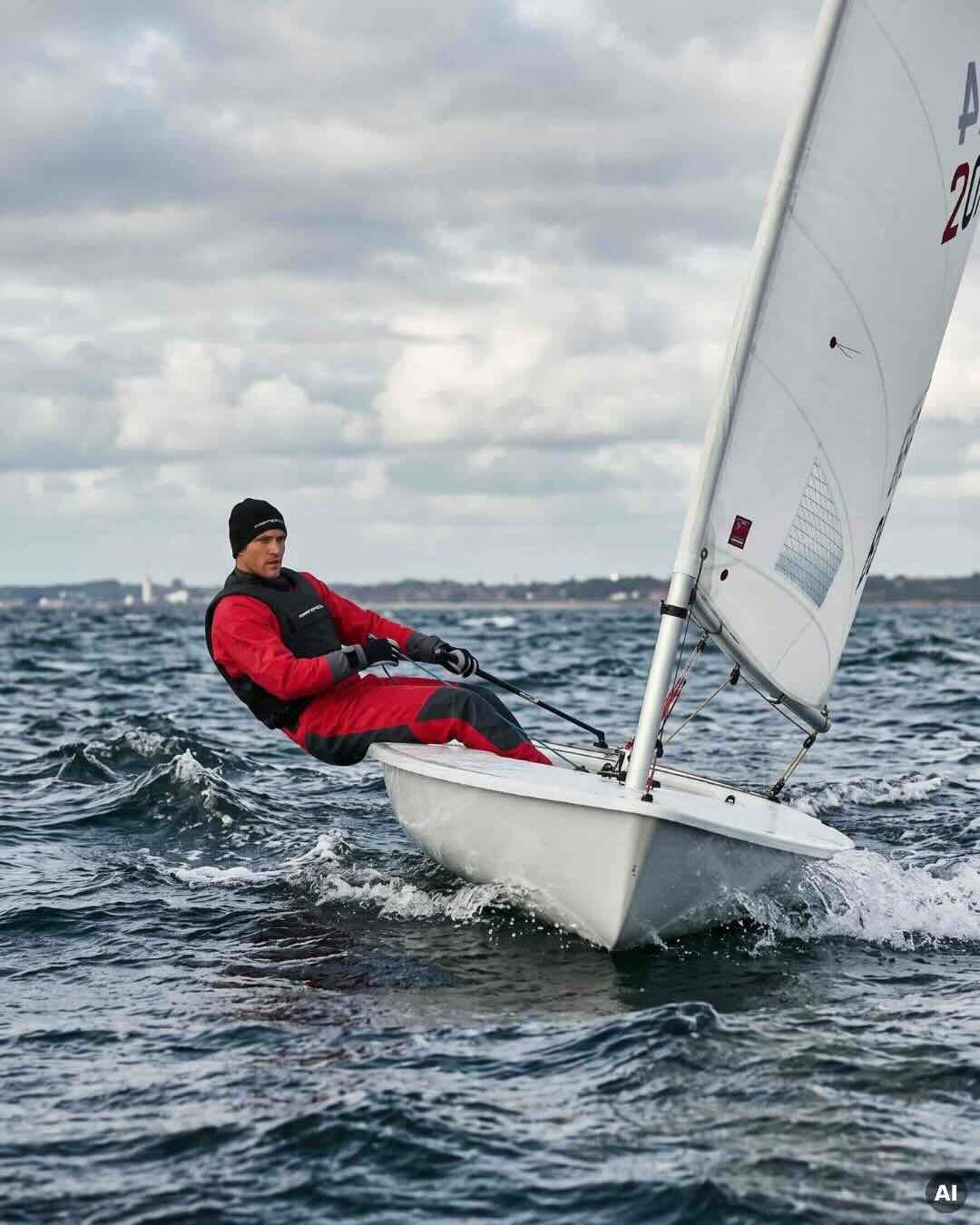
Whether a drysuit is useful should not depend on the air temperature alone. The most important factors are:
-
Water temperature: Cold water can draw heat from the body very quickly.
-
Air temperature and wind: Wind increases cooling, especially when clothing is wet.
-
Water contact: The greater the likelihood of spray, sea spray, or capsizing, the more important comprehensive protection from moisture becomes.
-
Duration of the activity: During long training sessions or regattas, protection against cooling plays a greater role.
-
Intensity of movement: During active sailing, the drysuit should not only provide protection but also offer sufficient freedom of movement and breathability.
A drysuit is particularly useful in spring, autumn, and winter as well as in cold sailing areas. The actual level of warmth can be regulated through the clothing worn underneath the drysuit. The drysuit primarily provides protection against water and wind, while base layers, fleece, or other insulating layers provide the required warmth. This gives a drysuit a key advantage in changing temperatures: the level of insulation can be adjusted individually without having to change the outer protection against moisture.
A drysuit does not, however, replace a buoyancy aid or life jacket. When sailing, a buoyancy aid suitable for the respective activity is worn over the drysuit.
Material
Bei einem Trockenanzug entscheidet nicht nur die Passform über den Schutz und Komfort. Besonders wichtig sind die Konstruktion des Materials, die Wasserdichtigkeit und die Atmungsaktivität. Unsere aktuellen Marinepool Drysuits setzen je nach Modell auf 3- oder 4-Lagen-Materialien und erreichen eine Wassersäule von 20.000 mm sowie eine Atmungsaktivität von 15.000 g/m²/24h.
Waterproof Rating
The waterproof rating indicates how much water pressure a material can withstand before water penetrates through it. As a general rule, the higher the value, the greater the waterproof performance of the material.
Our current Marinepool drysuits achieve a waterproof rating of 20,000 mm. This high value is particularly relevant for a drysuit because, during dinghy sailing, the material is exposed to more than just rain. When sitting or kneeling on wet surfaces, in heavy spray, or during a capsize, significantly greater water pressure acts on the suit.
However, the waterproof rating alone does not make a drysuit completely waterproof. Equally important are:
-
sealed, taped, or welded seams
-
waterproof zips
-
tightly sealing neck and wrist seals
-
waterproof or sealing leg or foot closures
That is why the entire construction should always be considered when purchasing a drysuit, not just the waterproof rating.
Breathability
During performance sailing, the body generates heat and moisture. A drysuit therefore needs not only to keep water out from the outside but also to allow water vapour to escape as effectively as possible.
The breathability of our current models is 15,000 g/m²/24h. This value describes how much water vapour can pass through one square metre of material within 24 hours under defined test conditions. In general, a higher value indicates greater moisture transport.
This property is particularly important for physically active sports such as dinghy sailing or SUP. It helps reduce the build-up of heat and moisture inside the drysuit.
For the entire clothing system to work effectively, the clothing worn underneath should also be breathable. A functional base layer and suitable midlayers support moisture transport better than materials that retain a lot of moisture.
3- or 4-Layer Drysuit
In a 3-layer material, the outer material, waterproof and breathable membrane, and an inner protective layer are permanently bonded together. This creates a lightweight, functional construction with good freedom of movement.
Our 4-layer drysuits feature an additional material layer and are designed more strongly for robust, regular use. Depending on the model, abrasion-resistant reinforcements are also used in particularly high-wear areas such as the knees and seat.
Important: More layers do not automatically mean greater waterproof performance.
Which Drysuit Is Right for Me?
Which drysuit for women or men is the right choice depends primarily on how intensively it will be used, how important a particularly lightweight construction is, and which type of neck and wrist seal is preferred. Our current models range from lightweight semi-drysuits to robust 4-layer drysuits for demanding dinghy sailing.
Our Racing Classic Drysuit is the perfect choice if you are looking for a fully waterproof drysuit with latex seals for regular dinghy sailing.
If you prefer neoprene or are sensitive to a tight latex neck seal, choose our Racing Dry Overall Neo Neck or its successor, the Racing Dry Over All Neo Neck II.
The latest version, the Racing Dry Overall Neo Neck III, features modern details such as a Tizip High Tec zip with overextension protection and is therefore suitable for particularly intensive use. Robustness and durable details are the main priorities here.
The MP Light Dry Overall Men is a particularly lightweight semi-drysuit with plenty of freedom of movement for SUP and dinghy sailing.
Was trägt man unter einem Trockenanzug?
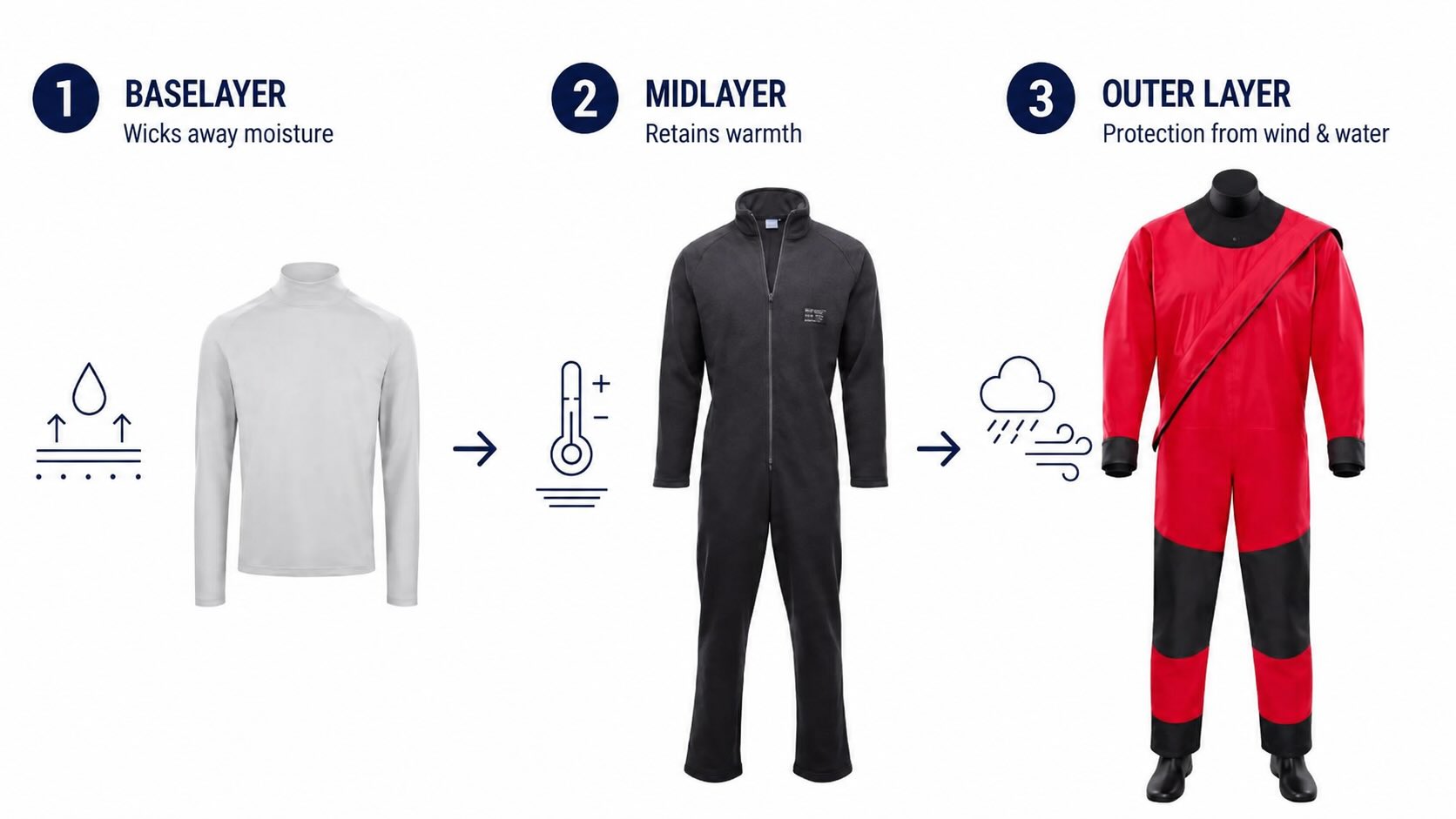
A drysuit keeps water out from the outside but provides very little warmth on its own. The lower the water and air temperatures, the more important a suitable insulating layer becomes.
We recommend a layering system consisting of functional underwear and, depending on the temperature, an additional fleece or midlayer.
Base Layer
Functional underwear should be worn directly against the skin. It transports moisture away from the body and therefore supports the moisture management of the breathable drysuit. Cotton is less suitable under a drysuit because it absorbs a lot of moisture and dries only slowly.
Fleece for Additional Warmth
In cool conditions, a thin base layer is often not enough. In this case, we recommend an additional insulating layer made from fleece. A fleece overall is particularly practical, as it provides continuous warmth for both the upper and lower body and does not separate between jacket and trousers during movement. Alternatively, a fleece jacket and fleece trousers can be combined.
Don’t Forget Your Feet and Hands
When doing watersports, the cold is often felt first in the hands and feet. Functional or warm socks can therefore be worn under integrated latex foot socks. The footwear worn over them must provide enough room for both layers and should not restrict the feet.
Depending on the temperature, suitable sailing or neoprene gloves can be added for the hands.
A beanie should also not be omitted in low temperatures.
Over 35 Years of Experience on the Water
Marinepool has been developing functional sailing apparel according to the principle “From Sailors for Sailors” since 1991. The brand was founded by active sailors and continues to work closely with sailing clubs, national teams, competitive sailing associations, and sea rescue organisations. The practical experience gained from these collaborations flows directly into product development.
Marinepool has been and continues to be a partner of numerous international regattas, sailing events, and top teams. These include the Austrian Sailing Federation, the Sailing Bundesliga, and the Bayerischer Yacht-Club. The products are tested under real conditions and continuously developed further.
Marinepool particularly benefits from its collaboration with renowned offshore sailors such as Vendée Globe skipper Fabrice Amedeo. For his months-long solo passages across the world’s largest oceans, he relies on Marinepool offshore clothing. The experience gained from one of the toughest single-handed regattas in the world provides valuable insights for the development of sailing jackets and offshore gear that offer reliable protection even in extreme weather conditions.
Experience Meets Innovation
Marinepool combines maritime tradition with modern technology. High-quality materials, innovative membranes, and functional details provide reliable protection and a high level of comfort in all weather conditions. Whether coastal sailing, offshore adventures, or leisure time on the water – for over three decades, Marinepool has stood for quality, performance, and a passion for watersports. Close collaboration with professional sailors, international sailing teams, and watersports associations ensures that every collection is tested under real conditions and continuously developed further.
FAQ – Frequently Asked Questions about Drysuits
What Is the Difference Between a Wetsuit and a Drysuit?
The main difference lies in the protection from cold and moisture. A wetsuit or neoprene suit allows a small amount of water to reach the body, where it warms up. The neoprene provides a large part of the insulation.
A drysuit keeps water largely out. Warmth is provided by the layers worn underneath, such as a base layer or fleece. This allows a drysuit to be adapted more flexibly to different temperatures and makes it particularly suitable for cold water and low air temperatures.
Is Neoprene or a Drysuit Better?
That depends on the water temperature, activity, and intended use. Neoprene is particularly suitable for watersports where regular or continuous contact with water is part of the activity. It fits close to the body, offers plenty of freedom of movement, and provides insulation even when wet. A drysuit is suitable if you want to stay as dry as possible and need additional protection in cold conditions. Different clothing layers worn underneath the drysuit also allow the level of warmth to be adjusted more flexibly. For dinghy sailing at low temperatures, we recommend a drysuit, particularly when frequent spray or capsizing is expected. In warmer conditions, neoprene can be the lighter and more close-fitting alternative.
Can You Swim in a Drysuit?
Yes, you can generally swim in a drysuit. However, it is not designed as a conventional swimming suit. Because of the loose fit and the air that can remain inside the drysuit, swimming feels different compared with a wetsuit or regular swimwear. It is therefore particularly important to wear the drysuit correctly and to release as much excess air as possible from the suit before use.
Summary
A drysuit is particularly suitable for dinghy sailing in cold water, low temperatures, and conditions involving regular contact with water. Our Marinepool drysuits combine high waterproof performance with breathability and, depending on the model, a 3- or 4-layer material construction.
Which drysuit is the right choice depends primarily on how frequently it is used, the desired level of durability, freedom of movement, and the preferred type of neck seal. Under the drysuit, we recommend functional base layers and, at low temperatures, an additional fleece layer. This allows the level of warmth to be individually adapted to the weather and water temperature.
Last updated: October 2026